


How Duct Leakage Increases Energy Bills

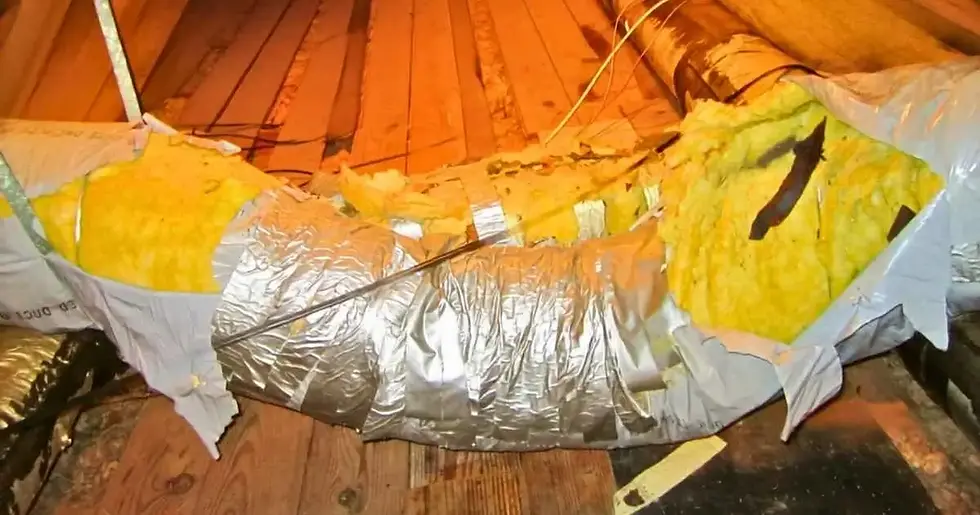
If your AC runs all day, some rooms are still hot, and your energy bills keep climbing, your air conditioner may not actually be the problem. In many Austin homes, duct leakage causes the air you already paid to cool to leak into the attic instead of being delivered inside the house.
Quick Answer (TL;DR)
Duct leakage increases energy bills because conditioned air is being lost into the attic instead of reaching your living space. The more air your duct system leaks, the longer your AC has to run to keep up. In my experience, major comfort and energy problems usually start around 20% duct leakage, but I’ve personally tested homes with duct systems leaking nearly 100% of the air.
Your AC Might Not Be the Problem
One of the biggest misconceptions I see in Austin homes is that high energy bills automatically mean you need a new AC system.
Most homeowners never suspect the ductwork.
They call because:
The AC runs all day
One room is always hot
The house feels humid
The house is dusty
Airflow feels weak
Summer electric bills are extremely high
But many times, the real problem is that the air being produced by the system is never actually making it into the house.
If conditioned air is leaking into the attic, your system has to run longer and longer just to try to maintain temperature.
How Duct Leakage Actually Raises Energy Bills
The explanation is simple:
You are paying to heat and cool air that is being lost into the attic instead of being delivered into the home.
All airflow should be delivered into the house. Anywhere else is simply wasted money.
And in Austin attics, this becomes an even bigger problem because attic temperatures can become extremely high during summer.
The AC keeps running longer trying to satisfy the thermostat while cooled air leaks into the attic the entire time.
That longer runtime increases:
Energy usage
Wear and tear on the equipment
Comfort complaints
In many homes, the homeowner assumes the AC system itself is weak or undersized when the real issue is airflow loss.
The Worst Duct Leakage I’ve Personally Tested

I’ve personally tested homes with nearly 100% duct leakage before.
That is obviously not common, but it does happen.
In that particular home, the duct system was completely falling apart and needed full duct replacement. It was summertime, and the upstairs was hot, humid, dusty, and had a strong musty attic smell. The energy bills were extremely high.
That experience actually changed the way I approach homes now.
Today, I always go into the attic before testing whenever possible. In that house, the duct failure was so obvious visually that testing almost wasn’t even necessary.
Where I Commonly Find Duct Leakage in Austin Homes
In Austin homes, I most commonly find major leakage in the return air system on upflow units.
Especially:
Return cavities
Where the bucket meets the sheetrock
Collars at the supply plenum
This is also where I usually tell contractors to look first when troubleshooting leakage.
When we follow up behind other duct sealing jobs and leakage is still above 10%, we almost always find the remaining leakage in the return side.
What Is Considered “Bad” Duct Leakage?
We generally recommend duct sealing on systems with more than 10% leakage.
But the larger comfort and energy problems usually start around 20% leakage in my experience.
The more leakage the system has, the more money and comfort you are losing.
And the frustrating part for homeowners is that many people spend thousands replacing HVAC equipment without ever addressing the duct system first.
Comfort Problems and Energy Problems Are the Same Thing
A lot of companies separate “comfort” and “efficiency” into two different conversations.
I really think they are the same thing.
All airflow should be delivered into the house. If it is leaking somewhere else, you are paying for conditioned air you never get to enjoy.
And honestly, we can’t really put a dollar amount on home comfort.
If You Aren’t Testing, You’re Guessing
One thing I strongly believe is this:
If you are not testing, you are guessing.
We test every duct system after sealing to verify the results and make sure we didn’t miss anything.
I’ve seen contractors seal ducts while the duct blaster is actively running and stop the moment they hit 10%.
That is not how we approach it.
We comprehensively seal everything we have access to first, then test afterward to verify the actual leakage rate.
That testing process is important because many of the biggest leaks are hidden in the return system where homeowners — and even some contractors — never look.
